
What Are Passive Cills?
If you have worked on any external insulation project in Ireland over the last ten years, you have seen passive cills. They are the white or grey ledges that sit beneath windows on homes with external wall insulation.
A passive cill is made from EPS200 polystyrene (expanded polystyrene with a density of 200 kPa). It is shaped like a window cill and then coated with a thin layer of cementitious render, usually around 3-5mm thick. The idea is simple. The polystyrene provides insulation to reduce thermal bridging at the window opening, and the render coating gives it a hard surface that looks like a real cill.
On paper, it sounds reasonable. In practice, it is a disaster.
Passive cills became popular in Ireland because they were cheap and fast to install. EWI contractors could shape them on site, stick them to the wall with adhesive, and render over them in the same pass as the rest of the insulation system. No separate trade needed. No waiting for a fabrication shop.
But the problems start almost immediately after installation.
Why Passive Cills Fail in the Irish Climate
Ireland's climate is the worst possible environment for passive cills. We get an average of 150 to 225 rain days per year depending on location. Temperatures swing from -5°C in winter to 25°C in summer. Coastal areas deal with salt-laden winds that eat through weak surfaces.
Here is what happens to passive cills under these conditions.
1. The Concrete Coating Cracks
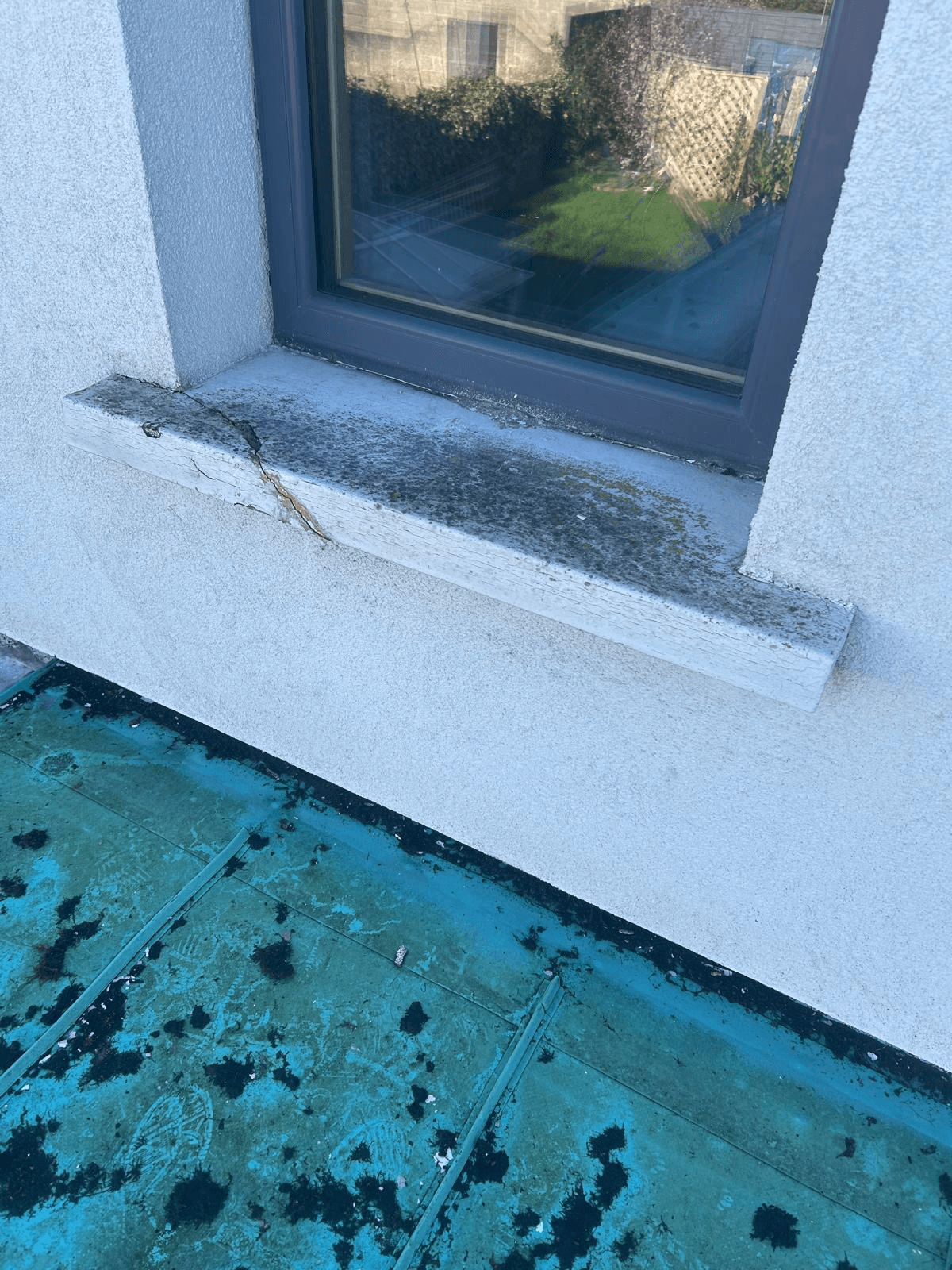
The thin cementitious coating on a passive cill is brittle. It has no flexibility. When temperatures change, the EPS core expands and contracts at a different rate to the render coating. This creates micro-cracks within the first year or two.
Once those cracks appear, they never heal. They only get worse. Water gets in through the cracks and sits behind the coating. In winter, that water freezes and expands, pushing the cracks wider. This is called frost heave, and it destroys passive cills across Ireland every single winter.
2. Mold and Algae Growth
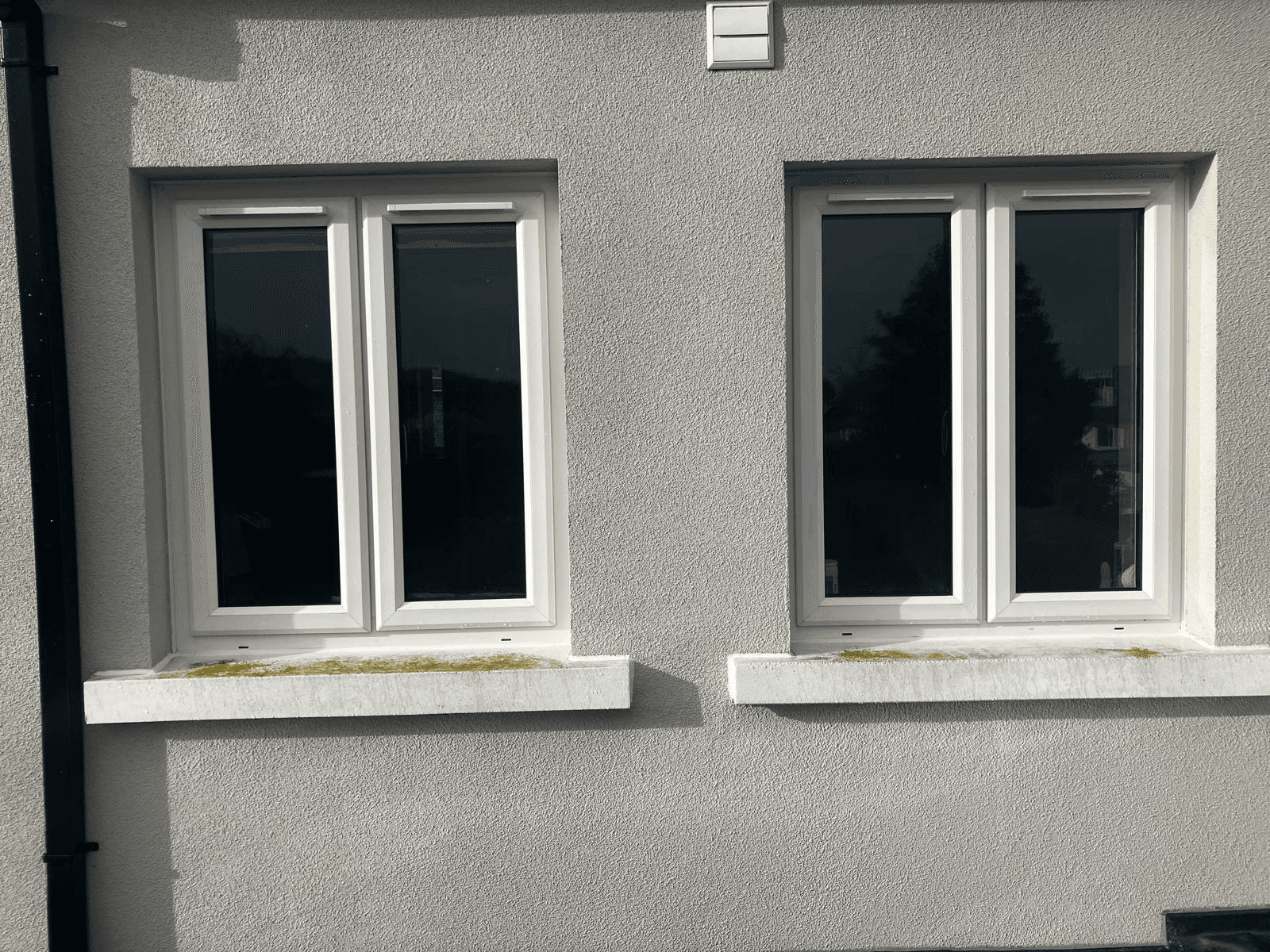
The rough surface of a rendered passive cill is a perfect home for biological growth. Unlike smooth aluminium, the textured render traps moisture in its tiny pores. Within two to three years, green algae appears. Then moss. Then black mold.
This is not just a cosmetic problem. Mold on window cills can affect indoor air quality, especially in bedrooms where windows are kept closed at night. For homes with children or elderly residents, this is a genuine health concern.
Cleaning the mold off does not fix the problem. The surface texture means it comes back within months. Some homeowners end up pressure washing their cills every spring, which actually makes the problem worse by breaking down the render coating even further.
3. Water Ingress Behind the Insulation
This is the most serious problem. When passive cills crack, water gets behind the render coating and soaks into the EPS polystyrene. While EPS200 has low water absorption on its own, the adhesive joints and the interface between the cill and the wall are weak points.
Water that gets behind a passive cill can travel down the face of the original wall, behind the insulation system. This causes:
Damp patches on internal walls
Black mold growth inside the house
Damage to plasterboard and internal finishes
Reduced effectiveness of the insulation
Potential structural damage to timber elements
The worst part is that you often cannot see this damage until it is severe. The insulation system hides the problem. By the time damp patches appear inside, the damage behind the wall can be extensive.
4. Poor Measurements Make Everything Worse
Passive cills are typically cut and shaped on site by the EWI contractor. There is no precision fabrication. No CNC cutting. No quality control. A worker with a hot wire cutter shapes the EPS on the back of a van and sticks it to the wall.
When measurements are wrong, and they frequently are, gaps appear between the cill and the window frame or between the cill and the wall. These gaps are weak points where water gets in. They also create cold bridges, which is ironic given that the whole point of a passive cill is to prevent thermal bridging.
Some contractors fill these gaps with silicone or mastic. This is a temporary fix at best. Silicone breaks down in UV light within a few years, and the gaps open up again.
The Real Cost of Passive Cills
Passive cills are cheap to buy. A standard passive cill costs around €15-30, depending on size. An equivalent aluminium window cill costs more upfront.
But here is what nobody tells you about the real cost.
When a passive cill fails, and most of them do within 5-8 years, you cannot simply replace the cill. The cill is bonded to the insulation system. To remove it, you have to cut into the render, remove the damaged cill, repair the insulation, re-render, and repaint. For a single window, this costs €300-500 in labour and materials.
A typical Irish home has 8-12 windows. If half of your passive cills fail, you are looking at €1,500-3,000 in remedial work. And that assumes the water ingress has not caused damage behind the insulation, which adds thousands more.
Compare that to an aluminium cill that costs more upfront but lasts 30+ years with zero maintenance. The maths is simple.
The Insurance Problem
Here is something most homeowners do not know. Some home insurance policies in Ireland will not cover damage caused by failed passive cills if they can show the cill was not fit for purpose. If your EWI contractor used passive cills and they cause water damage five years later, you might be on your own.
Passive Cills vs Aluminium Cills. A Direct Comparison
Feature | Passive Cills (EPS200) | Aluminium Cills |
|---|---|---|
Material | Polystyrene with concrete coating | Marine-grade aluminium |
Lifespan | 5-8 years before problems | 30+ years |
Water resistance | Poor, cracks let water in | Excellent, fully waterproof |
Mold growth | Common within 2-3 years | None, smooth surface |
Maintenance | Frequent cleaning and repairs | Wipe down once a year |
Colour options | Limited to render colours | Any RAL colour, powder coated |
Measurement accuracy | Cut on site, prone to errors | Factory fabricated to exact dimensions |
Thermal performance | Good initially, degrades when wet | Can include thermal break |
Impact resistance | Very poor, cracks easily | Excellent, dent resistant |
Cost (upfront) | €15-30 per cill | Higher per cill |
Cost (10 year total) | €300-500 per cill with repairs | Original cost only |
What Contractors in Ireland Are Saying
Talk to any EWI contractor who has been in the business for more than five years, and they will tell you the same thing. Passive cills cause callbacks.
Callbacks are the enemy of profitability in construction. Every time you have to go back to a site to fix a failed passive cill, you are losing money. You are paying wages, fuel, materials, and insurance for work that generates zero revenue.
Smart contractors in Ireland have already switched to aluminium cills. Yes, the material cost is higher. But the total project cost often works out similar or lower because:
No callbacks for failed cills
Faster installation with pre-fabricated components
Happier customers who refer more work
No warranty claims or disputes
One contractor in Cork told us he was spending two days a month going back to fix passive cills on jobs he completed two or three years ago. Since switching to aluminium, his callback rate dropped to zero for cill-related issues.
The SEAI Grant Factor
If you are doing an SEAI-funded retrofit in Ireland, the quality of your window detailing matters. SEAI inspectors are increasingly looking at cill installations as part of their quality assurance checks.
While SEAI does not explicitly ban passive cills, they do require that all components of an insulation system are fit for purpose and will perform for the expected lifetime of the system. Given the documented failure rates of passive cills, there is a growing risk that SEAI could flag installations with passive cills during inspections.
Using aluminium cills from a reputable supplier gives you documentation, specifications, and a product that clearly meets the durability requirements. It removes a potential risk from your grant application.
How to Switch to Aluminium Cills
If you are a contractor or homeowner planning an EWI project, here is how to get aluminium cills right.
Step 1. Measure Accurately
This is where most problems start. Wrong measurements mean wrong cills. The Cills.ie app guides you through every measurement with step-by-step instructions and a 3D preview so you can see exactly what you are ordering before you submit.
Step 2. Choose Your Colour
Pick any RAL colour to match your windows, doors, and fascia. The most popular colours in Ireland are RAL 7016 (Anthracite Grey), RAL 9005 (Jet Black), RAL 7035 (Light Grey), and RAL 9010 (Pure White). You can browse and select your exact colour using the RAL colour picker on our platform.
Step 3. Order and Pay
Submit your order directly from the app. Pay by card, Apple Pay, Google Pay, or bank transfer. Your order goes straight to manufacturing the moment you pay. No phone calls. No emails. No delays.
Step 4. Installation
Aluminium cills are straightforward to install. They arrive pre-cut to your exact dimensions with factory-applied powder coating. Most experienced EWI contractors can fit an aluminium cill in 15-20 minutes per window.
Passive Cills in Cork, Dublin, Galway, and Across Ireland
The problem with passive cills is not limited to one region. We have seen failures on homes in every county. But certain areas are worse than others.
Coastal areas like Salthill in Galway, Cobh in Cork, and Malahide in Dublin see accelerated deterioration due to salt spray. Passive cills in these locations can fail within 2-3 years.
Exposed rural sites in counties like Donegal, Kerry, and Clare take a battering from wind-driven rain. Passive cills on west-facing elevations are particularly vulnerable.
Urban areas are not immune either. Homes in Dublin, Limerick, and Waterford that were retrofitted with passive cills in 2018-2022 are now showing the same cracking and mold problems.
The Bottom Line
Passive cills were a cheap shortcut that is now costing Irish homeowners and contractors thousands in remedial work. The evidence is clear. They crack. They grow mold. They let water into your walls. They fail.
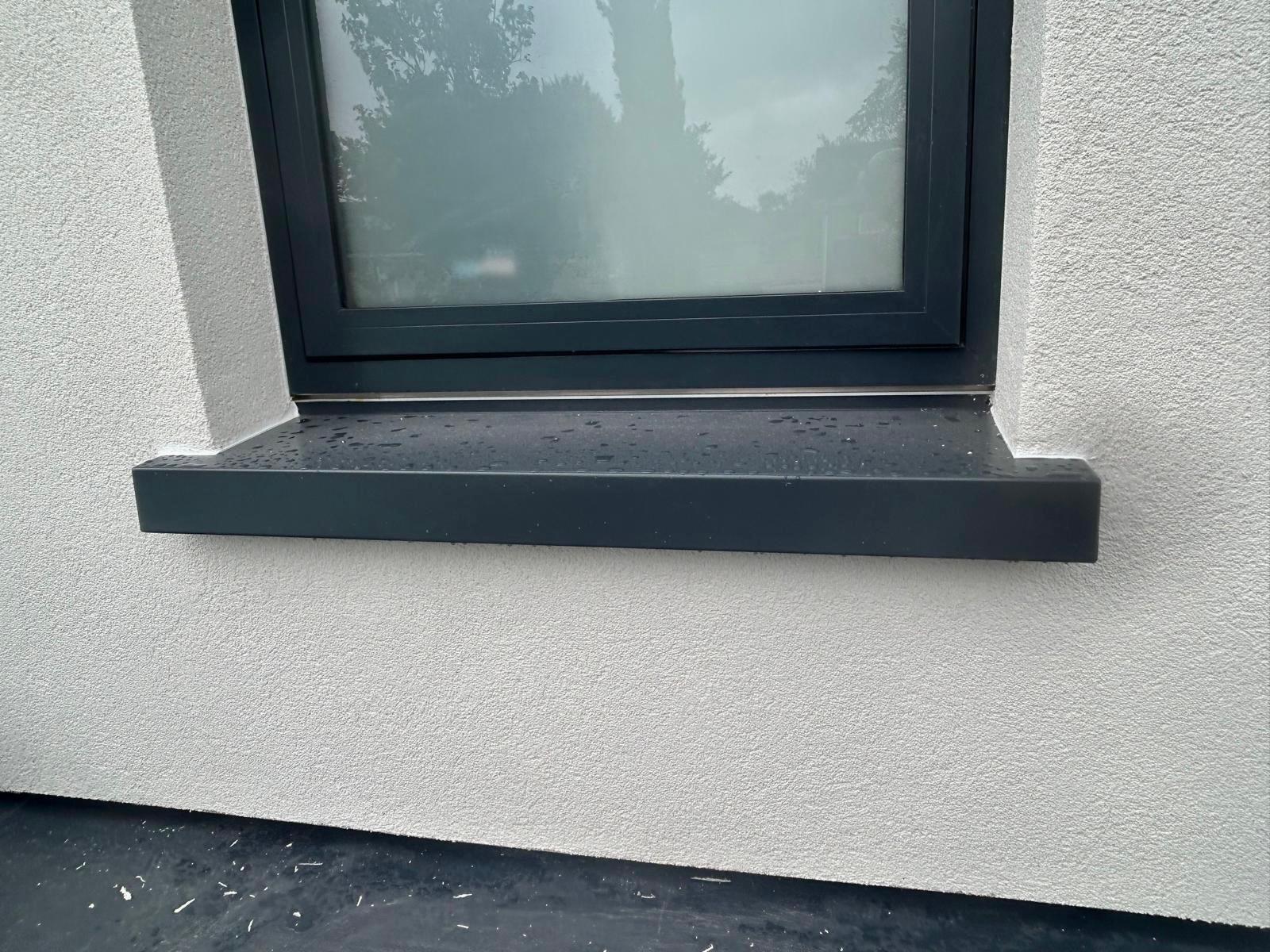
Aluminium window cills cost more upfront but they last decades. They do not crack, do not grow mold, and do not absorb water. They are powder coated in any RAL colour, made to your exact measurements, and built to protect your home for the long term.
If you are planning an EWI project, a retrofit, or a new build in Ireland, do not repeat the passive cill mistake. Measure once with the Cills.ie app, order your aluminium cills, and never worry about failed window cills again.
Cills.ie Technical Team
Passive Cills Ireland - Advantages, Disadvantages, and Why Contractors Are Switching
The real problems with passive cills on Irish homes. A practical guide for contractors and homeowners.

Trusted & Used By Professionals From






Order Your First Custom Aluminium Product
Cills.ie makes it easy to measure, customise, and order aluminium cills, flashings, trims, and cappings & more. All online, with engineer support included.