
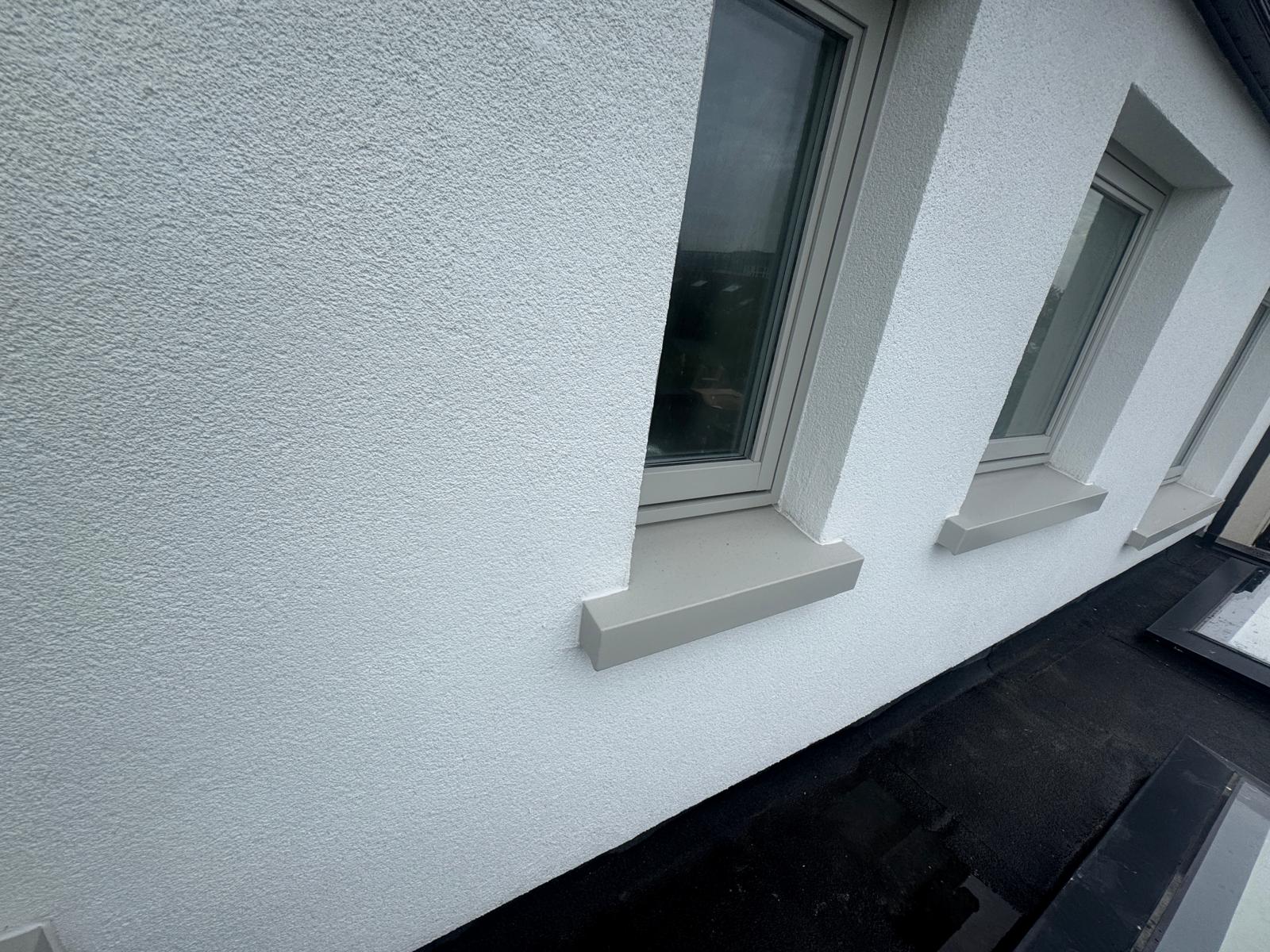
Water ingress around windows is a frustrating and expensive problem that affects thousands of Irish homes every year. Whether you're dealing with water coming under window sills, damp patches on walls, or mould around window frames, the root cause is often the same: poor window cill installation and inadequate waterproofing.
In this guide, we'll explain exactly why window cill leaking happens, how to identify the warning signs early, and most importantly, the proper window sill waterproofing and drainage solutions that stop leaks for good.
If you've noticed condensation, damp, or mysterious water stains near your windows, this article will help you understand what's happening and how to fix it permanently.
Understanding Water Ingress Around Windows
What Causes Window Leaks?
Water ingress around windows doesn't happen by accident. In most cases, it's caused by one or more of these common issues:
Poor Window Cill Design - If your window cill doesn't project far enough from the wall or lacks a proper drip edge, rainwater can run back toward the building instead of dripping clear of the facade.
Missing or Damaged Window Sill Waterproofing - Without proper sealing and waterproof membranes, water finds its way through gaps between the window frame and the wall, especially during heavy Irish rain.
Inadequate Window Cill Drainage - Water needs somewhere to go. If drainage isn't built into the cill design, water pools and eventually finds a way inside through the smallest gaps.
Installation Mistakes During Retrofit or EWI Projects - When external wall insulation is added to existing homes, window reveals change depth. If the window cill isn't redesigned to account for this, water ingress becomes almost inevitable.
Thermal Bridging and Cold Bridging - When insulation isn't continuous around windows, you get cold spots where warm indoor air meets cold surfaces, causing condensation that looks like a leak (but can lead to real water damage over time).
How to Spot Water Ingress Early
Warning Signs You Shouldn't Ignore
Catching water ingress early can save you thousands in repair costs. Watch for these telltale signs:
Damp patches on the wall below or beside windows, especially after rain
Mould around window frames - black or green spots are a dead giveaway
Peeling paint or wallpaper near windows
Water stains on internal window sills or reveals
Musty smell in rooms, particularly near external walls
Window condensation issues that seem excessive or unusual
Water literally coming under window sills during heavy rain
If you're experiencing any of these, don't wait. Water damage gets worse over time, not better.
The Root Cause - Window Cill Problems
Why Traditional Window Cills Fail
Many older homes have concrete, stone, or basic metal cills that simply weren't designed with modern waterproofing standards in mind. Here's what goes wrong:
Insufficient Projection - The cill doesn't stick out far enough from the wall, so water runs down the facade instead of dropping clear.
No Drip Detail - Without an undercut drip groove on the bottom edge of the cill, water clings to the underside through surface tension and creeps back toward the wall.
Poor Integration with EWI Systems - When external insulation is added, the wall thickness increases. If the old cill isn't replaced or extended, you create a perfect pathway for water to get trapped between the insulation and the window frame.
Cracked or Porous Materials - Concrete and stone cills can crack over time, absorbing water like a sponge and transmitting it directly into your walls.
The Proper Solution - Professional Window Cill Installation
What Makes a Good Window Cill?
A properly designed and installed window cill should do three things:
Direct water away from the building with adequate projection (typically 40-50mm beyond the finished wall surface)
Break the water's surface tension with a drip detail underneath
Integrate seamlessly with your insulation system to prevent thermal bridging
Key Features of Quality Window Cill Installation:
Correct Measurements - The cill must be measured to account for your wall build-up, including insulation thickness and render finish.
Proper Pitch - A slight slope away from the window (typically 5-10 degrees) ensures water runs off, not pools.
End Dams and Upstands - These small vertical edges at each end of the cill prevent water from running sideways into the reveal.
Drip Edge Detail - The underside of the cill should have a groove or edge that forces water to drip clear of the wall.
Sealed Joints - All connections between the cill, window frame, and wall must be properly sealed with appropriate membranes and sealants.
Aluminium Window Cills - The Modern Solution
Why Aluminium Outperforms Traditional Materials
When it comes to preventing water ingress around windows, aluminium cills offer significant advantages:
Custom Made to Exact Specifications - Every window opening is different. Made-to-measure aluminium cills account for your specific wall thickness, insulation depth, and window size.
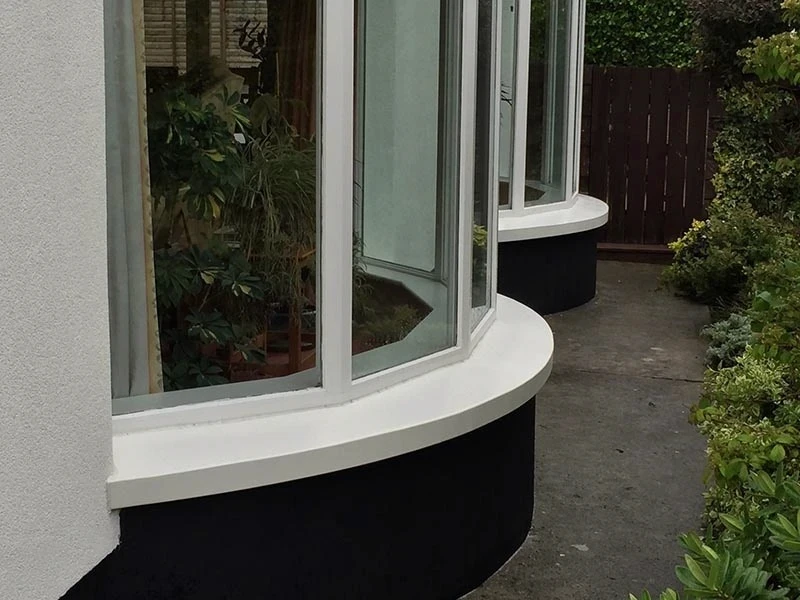
Powder Coated for Durability - Unlike painted metal or concrete, powder-coated aluminium won't corrode, crack, or absorb water, even in Ireland's wet climate.
Precision Engineering - Factory-fabricated aluminium cills include built-in drip details, proper angles, and consistent quality that's impossible to achieve on-site with traditional materials.
Perfect for Retrofit and EWI - Aluminium cills are specifically designed to work with external wall insulation systems, solving the window reveal depth problem that causes so many leaks.
Long Lifespan - While concrete cills crack and timber rots, aluminium cills last decades without maintenance.
Additional Fixes for Window Waterproofing
Beyond the Cill - Complete Protection
While a quality cill is essential, complete window sill waterproofing requires attention to the whole system:
Window Reveal Detail - Insulation should return into the window opening, with proper membranes lapping from the wall onto the window frame.
Head Flashings - The top of the window needs protection too, usually with aluminium flashing that directs water out and over the window.
Drainage Plane - External insulation systems should include a drainage layer that allows any moisture that does penetrate to escape rather than being trapped.
Quality Sealants - Use appropriate exterior-grade sealants at all frame-to-wall junctions, but never rely on sealant alone - proper detailing is what really keeps water out.
When to Call a Professional
DIY vs Professional Installation
Some minor window leak repairs can be handled by a competent DIYer - resealing small gaps, replacing worn sealant beads. But for persistent water ingress problems or when you're undertaking external insulation work, professional installation is essential.
A qualified installer will:
Conduct a proper assessment of your existing window details
Specify the correct cill dimensions and profiles
Ensure integration with insulation and waterproofing systems
Provide warranties on materials and workmanship
Trying to solve chronic water ingress problems with repeated DIY attempts often costs more in the long run than getting it done right the first time.
Preventing Future Water Ingress
Maintenance Tips
Even with perfect window cill installation, a little maintenance goes a long way:
Clear debris from window sills regularly - leaves and dirt can block drainage
Check sealants annually and renew any that are cracking or shrinking
Inspect after storms for any damage or new gaps
Keep gutters clean - overflowing gutters dump extra water onto window details
Address condensation inside the home with proper ventilation
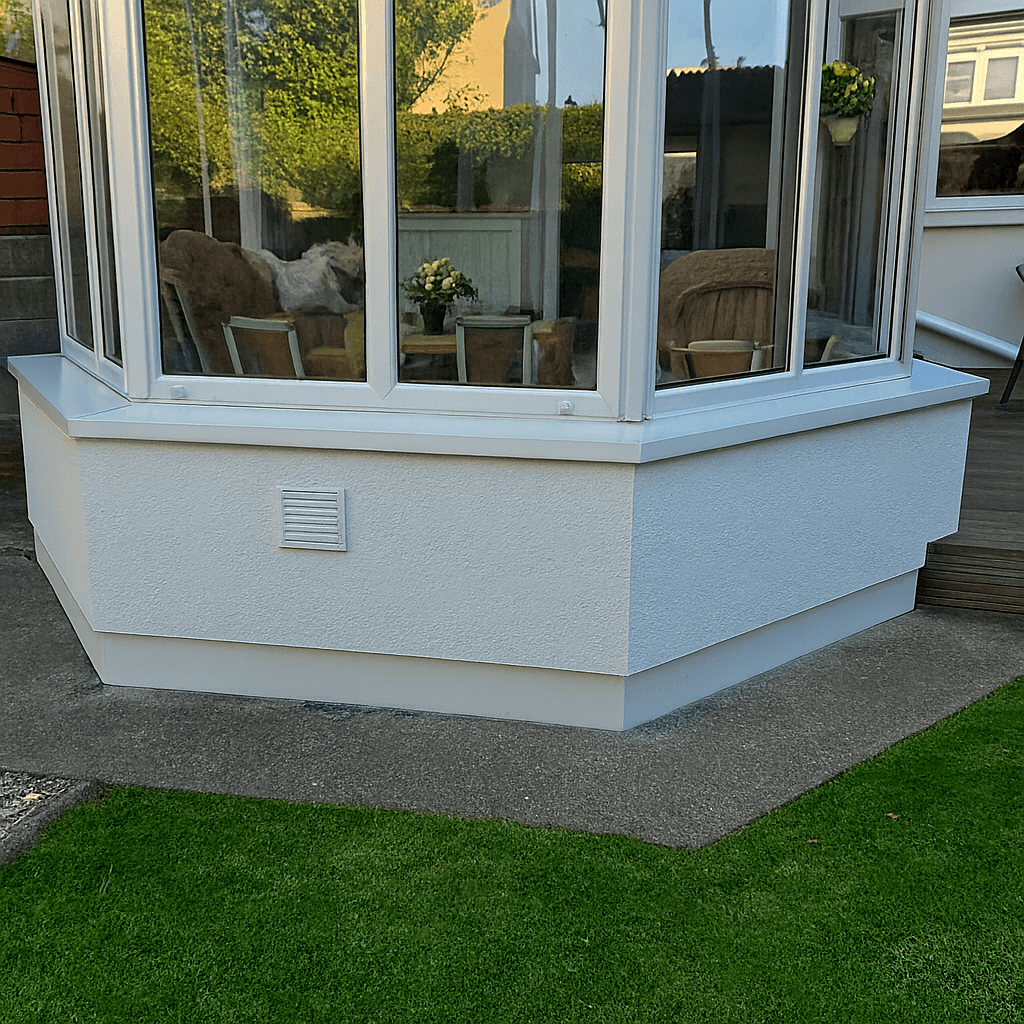
Water ingress around windows, window cill leaking, and damp around window frames are problems you don't have to live with. With proper window sill waterproofing, correct window cill drainage design, and professional installation of quality aluminium cills, you can protect your home from water damage for decades to come.
The key is understanding that your window cill isn't just a finishing trim - it's a critical component of your building's weather protection system. Especially in Ireland's wet climate and particularly when adding external wall insulation, getting the window details right makes the difference between a dry, healthy home and ongoing water problems.
How Cills.ie Makes Window Cill Installation Easy
At Cills.ie, we've developed Ireland's first online system for ordering custom-made aluminium window cills, flashings, and cappings designed specifically for Irish construction and retrofit projects.
Here's how it works:
Measure Once - Use our step-by-step measurement guides to get accurate dimensions for your window openings, including insulation depth and desired projection.
Configure Online - Our online platform lets you specify exactly what you need - cill profile, length, end dam style, powder coat colour - with real-time pricing.
Engineer Support Included - Not sure about your measurements or which profile you need? Our team includes qualified engineers who review every order and can provide technical guidance.
Delivered to Site - Your custom-fabricated aluminium cills arrive ready to install, with all the proper drip details, angles, and finishes built in.
Quality Guaranteed - Every cill is manufactured in Ireland to exact specifications, powder-coated for durability, and comes with full technical support.
Whether you're a homeowner planning a retrofit, a contractor working on multiple projects, or an architect specifying window details, Cills.ie takes the complexity out of getting water ingress protection right.
Create your free account and start designing your custom window cills today →
Mentainance
Stop Window Leaks with Proper Window Cill Installation and Waterproofing
Discover why windows leak, how to spot water ingress early, and the proven solutions for window cill drainage and waterproofing that keep Irish homes dry and protected.

Trusted & Used By Professionals From






Order Your First Custom Aluminium Product
Cills.ie makes it easy to measure, customise, and order aluminium cills, flashings, trims, and cappings & more. All online, with engineer support included.