
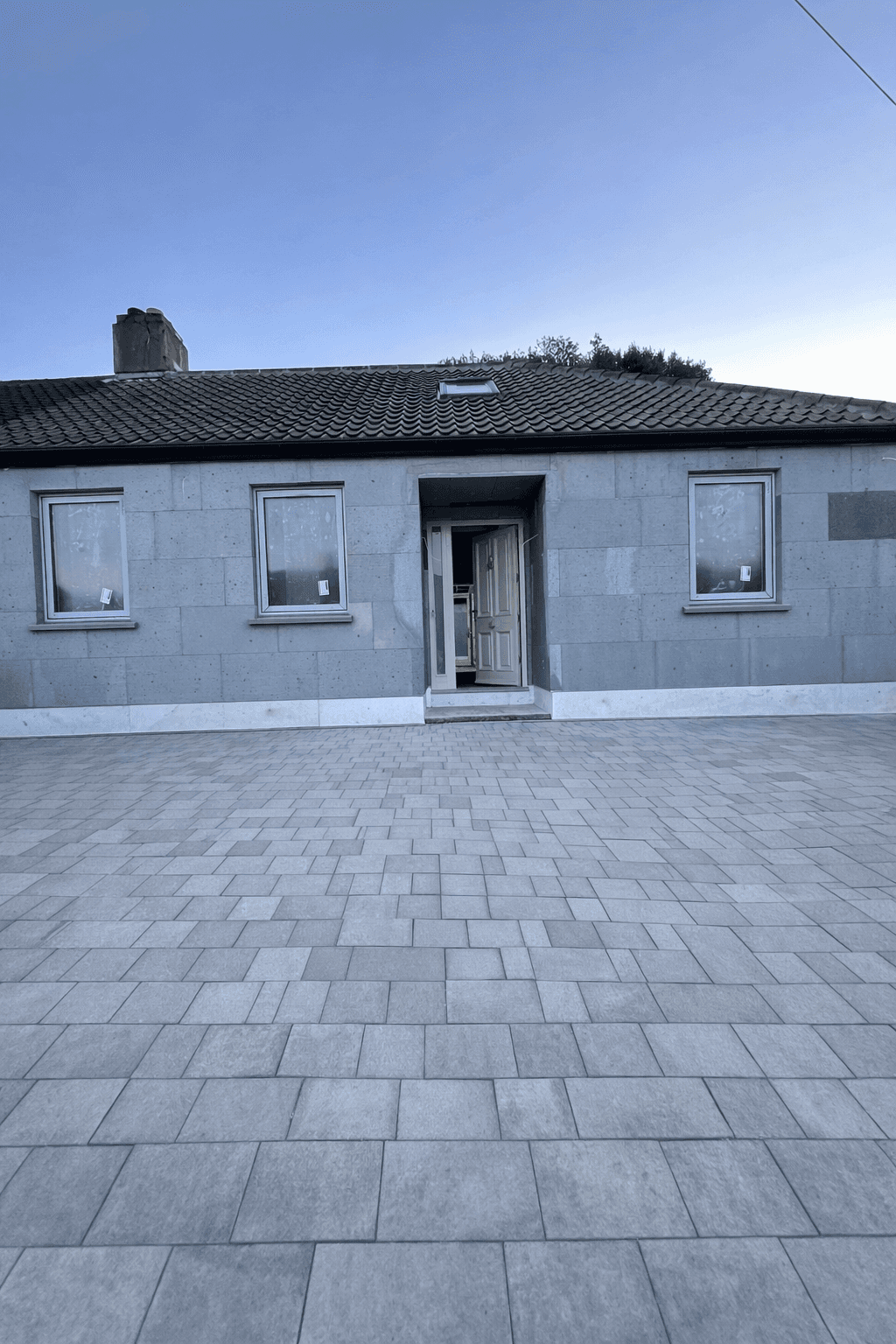
An Honest Look at External Insulation
My neighbour had her house wrapped two years ago. Semi-detached in Glasnevin, built in 1958. Before the work, she was spending €3,200 a year on heating oil. Last winter? Under €1,400. Her kitchen used to get black mould behind the units every January. Not anymore.
But here's what she didn't expect: the window cills were a disaster.
The contractor used the cheapest plastic cills he could find. Within eight months, one had cracked from frost, two had started yellowing, and the drip edges were so short that water ran straight down the new render, leaving grey streaks on her lovely white finish.
That's why I'm writing this. External insulation can transform a cold Irish house. But the details matter – especially the cills.
What External Insulation Actually Does
Most Irish houses built before 1990 have almost no insulation in the walls. Solid block, maybe a bit of cavity, often just empty space. Heat pours out of them.
External insulation fixes this by wrapping the outside of your house in 80-150mm of insulation board, then rendering over it. The results are significant:
Wall U-value drops from around 2.0 to under 0.3
Heating demand falls by 40-60% in most houses
Internal wall surfaces stay warm (no more cold spots)
Condensation and mould risk drops dramatically
The BER jump is usually three or four grades. D2 to B1 isn't unusual.
The Real Costs in 2026
Let me give you actual figures from projects I've seen quoted this year:
Semi-detached house (120m²): €18,000 - €24,000 before grants Detached bungalow (100m²): €16,000 - €22,000 before grants Large detached (200m²+): €28,000 - €38,000 before grants
Those are for EPS (polystyrene) systems with silicone render. Wood fibre or phenolic boards cost 20-40% more. Complicated access, multiple roof lines, or lots of windows pushes prices up.
After SEAI grants, you're typically looking at 50-60% of those figures. The Warmer Homes scheme covers 100% for qualifying households.
SEAI Grants Explained Simply
Three main routes:
Warmer Homes Scheme: If you get the fuel allowance, you probably qualify for fully funded insulation. No cost to you. The catch? The waiting list is 12-18 months in most areas.
One Stop Shop: The contractor handles everything. You get a single quote covering all upgrades, they manage the grant paperwork, and you pay your contribution. Typical grant coverage is 50-60% of costs.
Individual Grants: You organise everything yourself. Apply for each grant separately, get quotes from SEAI-registered contractors, pay them, then claim the grant back. More work, but you control everything.
Grant amounts for external insulation:
Detached: up to €8,000
Semi-detached or end terrace: up to €6,000
Mid-terrace or apartment: up to €4,000
Why Cills Get Overlooked
Here's the problem: when you add 100mm of insulation to your walls, your existing window cills become 100mm too short.
The old cill might have stuck out 50mm past the wall. After insulation, it's recessed 50mm behind the new render. Rain lands on the render face instead of being thrown clear.
Every good EWI contractor knows this. They include new cills in their quote. But the spec varies wildly.
What Goes Wrong With Cheap Cills
The bottom-of-the-range approach is site-bent aluminium offcuts or worse, uPVC trim. Problems I've seen:
Insufficient projection: Cills that barely overhang the render. Water hits the wall, runs down, stains the finish.
No drip groove: Without a proper drip edge underneath, water tracks back against the render. This is surprisingly common.
Colour mismatch: Generic grey that doesn't match the windows. Looks terrible.
Rust spots: Low-grade aluminium or cheap fixings that corrode. Streaks on the render within a year.
Cracking: uPVC cills that crack in frost. Ireland gets cold enough to break cheap plastic.
What Quality Cills Should Include
For external insulation projects, insist on:
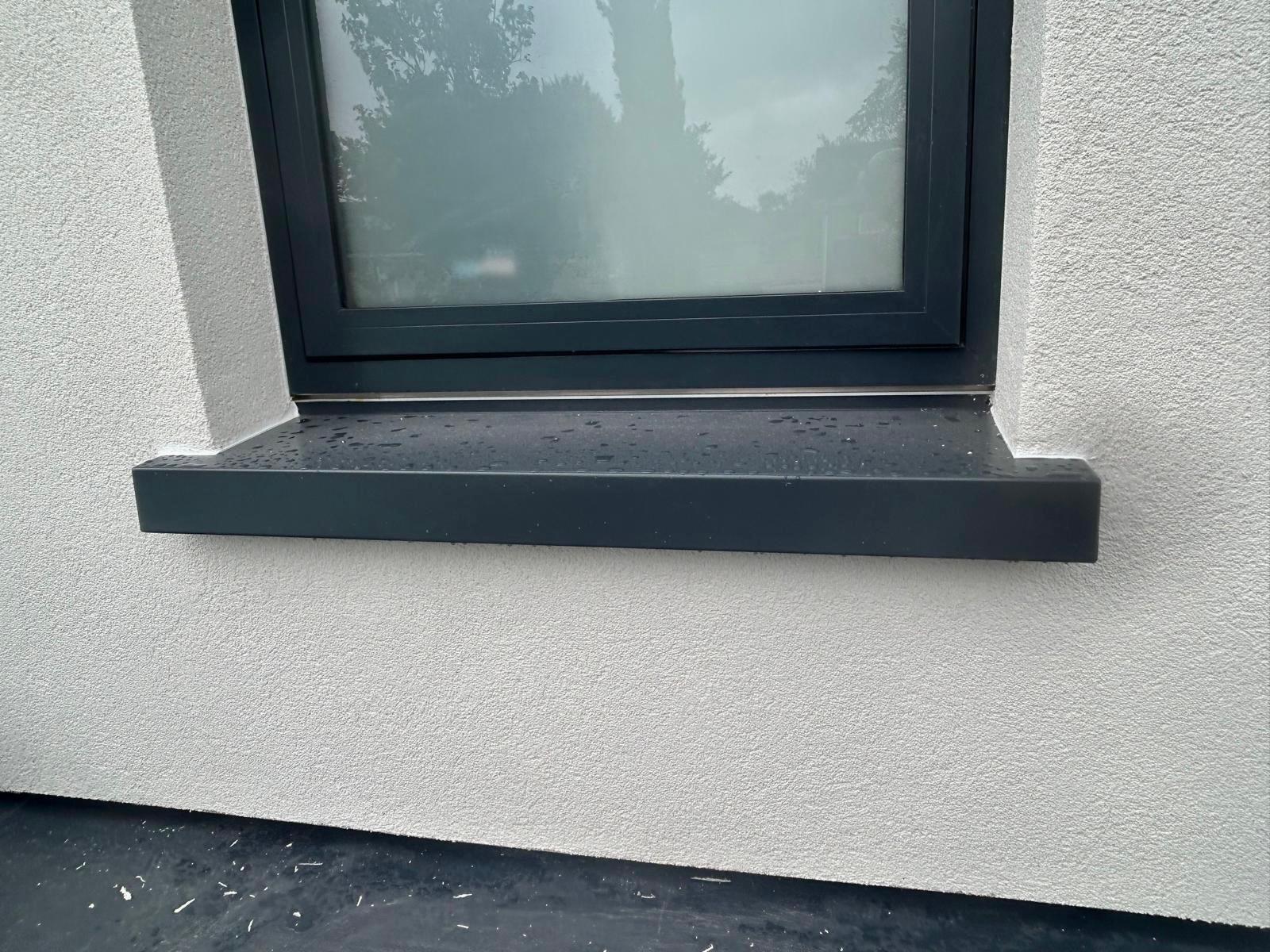
1.5mm aluminium minimum – thinner material dents and flexes
Proper projection – minimum 40mm past the finished render face
Drip edge with groove – factory-formed, not just a bent edge
Matching RAL colour – exact match to your window frames
Factory-fitted end caps – site-applied ones never seal properly
Marine-grade coating – especially within 10km of the coast
The cost difference between good cills and cheap ones is maybe €300-500 on a typical house. That's nothing compared to the repair costs when water damage appears.
Making the Decision
External insulation makes sense if:
Your walls have no insulation or poor cavity fill
Your heating bills are high
You're planning to stay in the house 10+ years
The exterior needs work anyway (rendering, painting)
It's probably not worth it if:
Your walls already perform well
You're selling soon
Access is very difficult
The house is protected or has architectural restrictions
Questions for Your Contractor
When getting quotes, ask:
What insulation thickness and type are you proposing?
What's the finished U-value?
Are new window cills included?
What material are the cills? (Accept only aluminium)
Will the cill colour match my windows?
How long is the cill guaranteed?
Who manufactures the cills?
If they can't answer clearly, or they say "we'll sort the cills on site," that's a warning sign.
Planning external insulation? Cills.ie manufactures aluminium window cills specifically for external insulation projects, with extended projections and proper render integration details.
Performance
External Wall Insulation Ireland - Pros, Cons, and SEAI Grant Guide
Complete guide to external wall insulation benefits in Ireland. SEAI grants, energy savings, and aluminium cill requirements explained.

Trusted & Used By Professionals From






Order Your First Custom Aluminium Product
Cills.ie makes it easy to measure, customise, and order aluminium cills, flashings, trims, and cappings & more. All online, with engineer support included.