
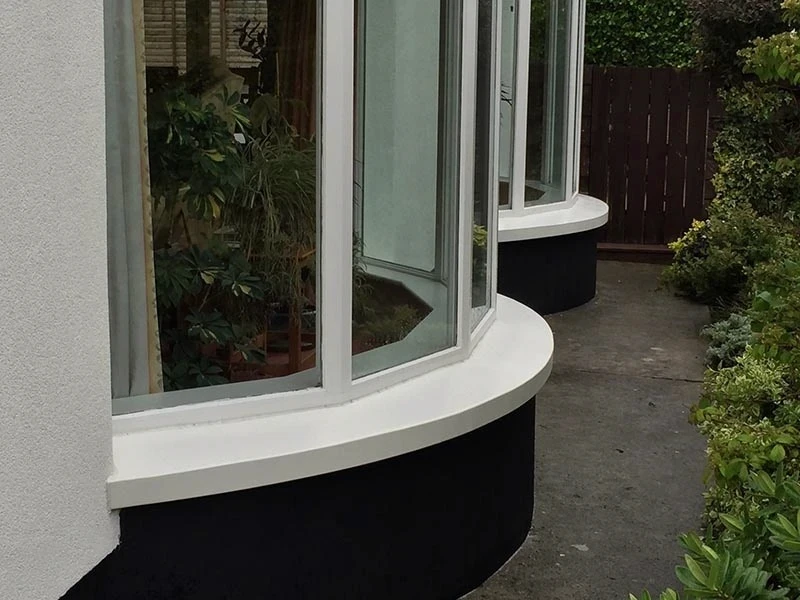
Why Aluminium Window Cills Matter for Irish Homes
If you are building a new home or retrofitting an older property in Ireland, you have probably noticed that window cills are one of those details that can make or break your project. Get them wrong and you will be dealing with water damage, unsightly gaps, and expensive repairs down the line.
Aluminium window cills solve most of the problems that Irish homeowners and builders face. They do not rot like timber. They do not crack like concrete. And they handle our wet, windy weather without any fuss.
The Irish Weather Problem
Ireland gets around 1,200mm of rainfall each year in the east and up to 2,500mm along the Atlantic coast, according to Met Éireann. That is a lot of water hitting your windows.
Traditional cill materials struggle with this:
Timber cills need regular painting and sealing. Miss a year and the rot sets in. In coastal areas, salt spray accelerates the damage even further.
Concrete and stone cills absorb moisture and can crack when frost gets into the pores. They also stain over time, leaving your windows looking tired.
Plastic cills fade in sunlight and become brittle after 10 to 15 years. The colour never quite matches your windows either.
Aluminium solves these problems. A powder-coated aluminium cill will last 30 years or more with zero maintenance. The finish does not fade. It does not absorb water. And you can match any RAL colour to your window frames.
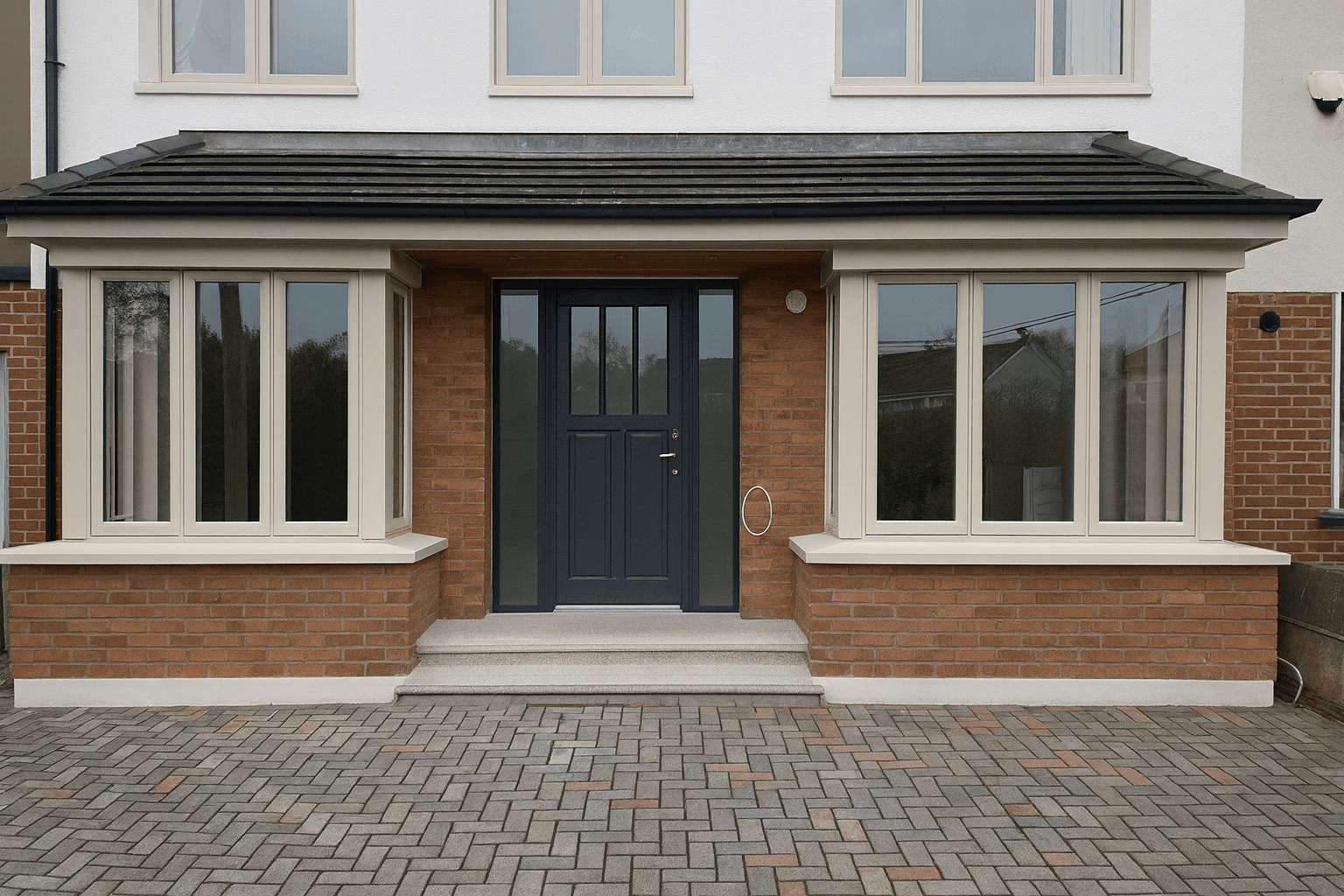
External Wall Insulation Changes Everything
If you are doing an SEAI-funded retrofit with external wall insulation, you face a specific challenge. The insulation adds 100mm to 200mm to your wall thickness. Your existing cills are now too short.
Water dripping off a short cill lands directly on the insulation face. Within a year, you will see green algae staining. Within five years, the render can fail completely.
External insulation cills need to project far enough to throw water clear of the insulation. That typically means 150mm to 300mm projection, compared to the 50mm to 80mm on a standard cill.
How to Measure for Aluminium Window Cills
Accurate measurement prevents costly mistakes. Here are the key dimensions you need:
A (Upstand Height): The back edge that sits behind the window frame. Typically, 20mm to 30mm for standard installations, or 25mm to 40mm for external insulation projects, allowing for render thickness.
B (Projection Depth): How far the cill sticks out from the wall face. Measure from the window frame to where you want the drip edge to end. Add 40mm to 60mm beyond the insulation face for proper water clearance.
C (Internal Profile): The measurement for the cill profile itself.
DE (Thickness): The combined thickness of the cill body.
F (Front Lip Width): The visible front fascia that you see from the ground.
G (Main Sill Width): The width that matches your actual window opening.
J (Wing/Side Lip): The return dimension on each side of the cill.
K (Profile Measurement): Additional measurement for complex configurations.
H (Overall Length): The total length including all returns and wings.
Take measurements at three points along the opening. Windows are rarely perfectly square, so use the smallest measurement to avoid a cill that does not fit.
Choosing the Right RAL Colour
RAL colours are an international colour matching system used across the construction industry. When you order RAL 7016, you get the exact same anthracite grey whether you are buying cills, windows, or fascia boards.
The most popular choices in Ireland right now are:
RAL 7016 Anthracite Grey: This accounts for nearly half of all orders. It matches most modern window frames and hides dust and dirt well.
RAL 9005 Jet Black: A bold choice that looks striking against white or cream render.
RAL 9010 Pure White: The classic choice that works with traditional homes.
RAL 7035 Light Grey: Softer than anthracite, this works well with lighter colour schemes and coastal properties where darker colours show salt deposits.
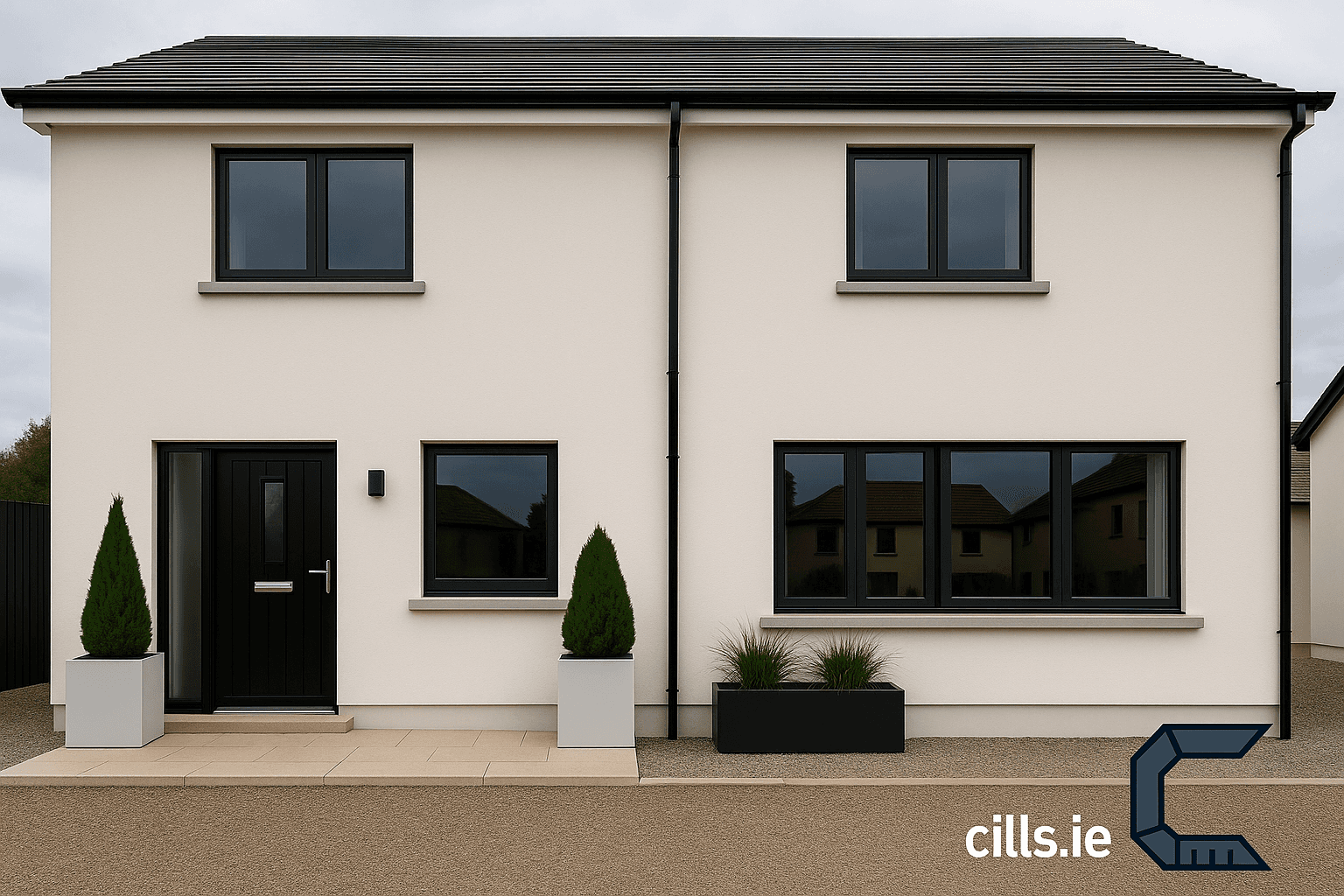
Installation Tips
Proper installation is just as important as proper specification. The Building Research Establishment recommends:
Surface preparation: The substrate must be clean, dry, and level. Any gaps or unevenness will show through and can trap water.
Sealant choice: Use a quality polyurethane or silicone sealant. Cheap sealants fail within a few years. Make sure the sealant is compatible with both aluminium and your wall material.
Fixing centres: Space fixings no more than 600mm apart. For cills over 2 metres, you may need additional support brackets.
Fall: The cill should slope away from the window at roughly 5 degrees. This ensures water drains off rather than pooling.
Expansion: Aluminium expands and contracts with temperature changes. For long runs over 3 metres, leave a 3mm gap at joints.
Common Mistakes to Avoid
Measuring before insulation is complete: If you are adding external insulation, wait until the boards are on before measuring. Guessing the final depth leads to cills that are too short.
Forgetting end caps: Open ends let water into the cill. Factory fitted end caps seal the cill properly.
Wrong angle on bay windows: Bay cills need precise angle measurements. A degree or two off and the joints will not close properly.
Ignoring thermal bridging: The cill should not create a cold spot that causes condensation. In high performance builds, consider cills with thermal break details.
Need aluminium window cills for your project? Cills.ie offers custom sizing, any RAL colour, and guided measurement tools to help you get it right first time.
External Wall Insulation
Aluminium Window Cills Ireland
Streamline Your Retrofit Project with Precise Aluminium Window Cills The common challenges of measurement errors, colour mismatches, and complex ordering processes can delay installations and add costly rework on site. If you're aiming for perfectly customised aluminium cills and trims that integrate seamlessly with external wall insulation systems, accuracy and speed are essential.

Trusted & Used By Professionals From






Order Your First Custom Aluminium Product
Cills.ie makes it easy to measure, customise, and order aluminium cills, flashings, trims, and cappings & more. All online, with engineer support included.