
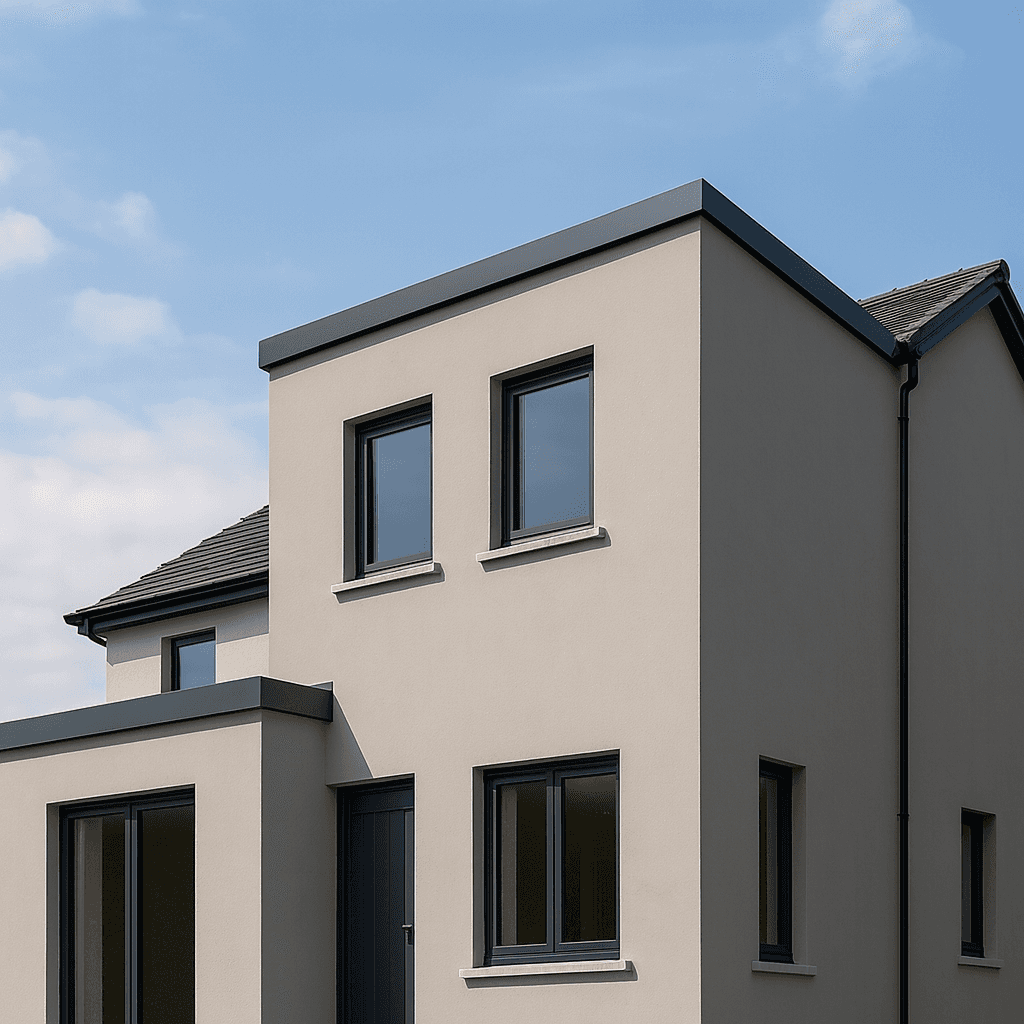
Why Irish Builders Are Switching from Concrete to Aluminium Coping
I remember a job in Dundrum where the architect had specified concrete copings on a new apartment block. Within eighteen months, those copings had green algae streaking down the render. The developer ended up replacing them all with aluminium coping at twice the original cost.
That is the problem with concrete copings in Ireland. Our wet climate means they absorb water, grow moss, and stain everything beneath them. Aluminium coping solves this permanently.
What Is Aluminium Coping and Why Does It Matter for External Wall Insulation?
Aluminium coping is the metal capping that sits on top of parapet walls, garden walls, and any horizontal masonry surface exposed to weather. When you install external wall insulation (EWI), proper coping becomes even more critical because the insulation thickness changes all your wall dimensions.
A retrofit project in Blackrock last year illustrates this perfectly. The contractor added 150mm of external insulation but forgot to extend the parapet capping. Water ran straight down behind the insulation board, causing €8,000 in remediation costs.
How Much Does Aluminium Parapet Capping Cost in Ireland?
Pricing for aluminium coping in Ireland depends on three factors:
Width: A 200mm wide capping for a standard 100mm block wall costs less than a 400mm capping for an insulated wall.
Profile: Simple flat cappings cost less than complex, ridged profiles with multiple bends.
Colour: Standard colours like RAL 7016 (anthracite grey) and RAL 9005 (jet black) cost the same. Unusual RAL colours may have minimum order requirements.
As of early 2026, expect to pay between €25 and €45 per linear metre for standard aluminium parapet capping in Ireland, depending on width and profile. Custom corners and end caps add €15-30 each.
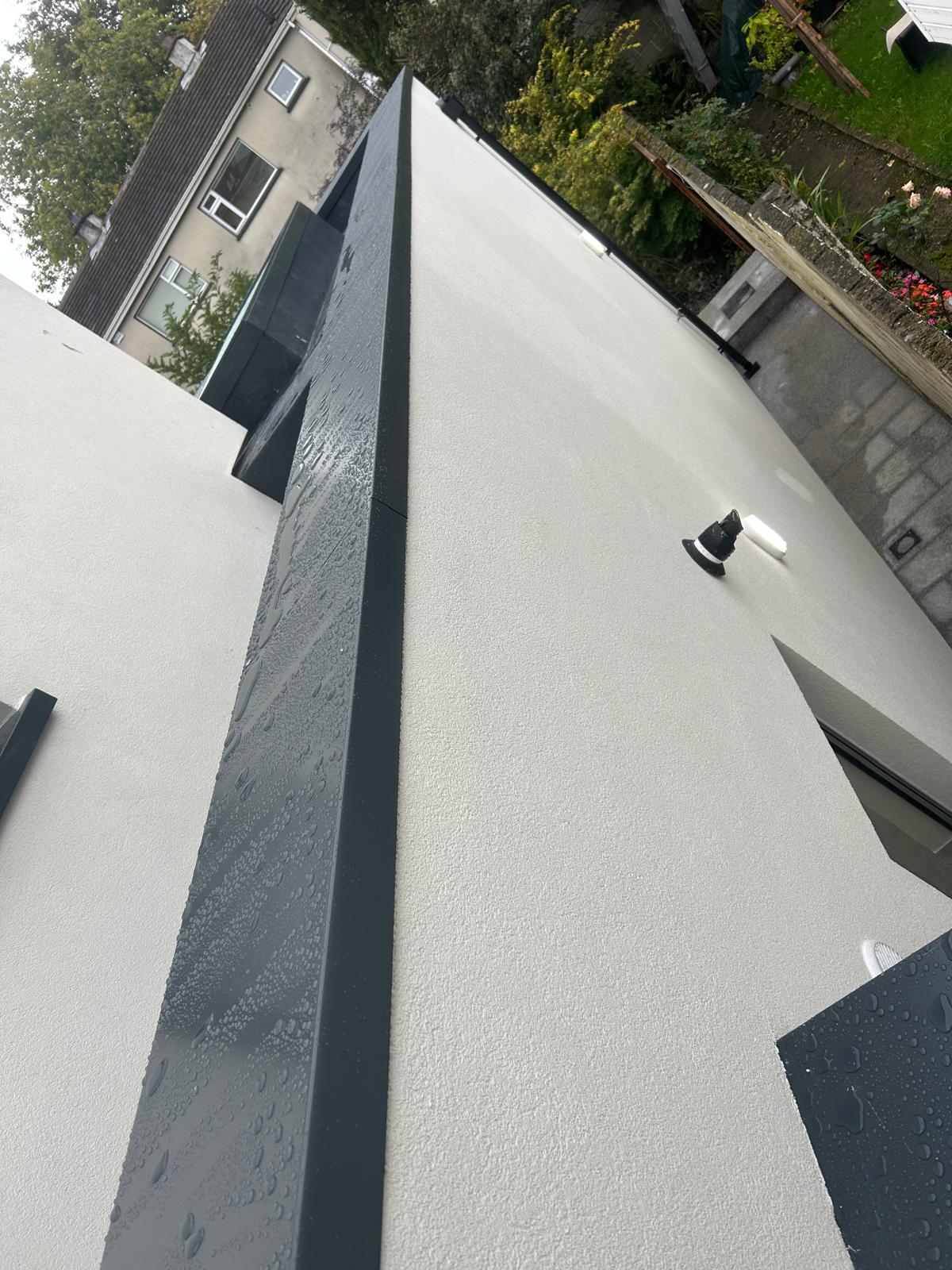
Types of Aluminium Capping for Irish Building Projects
Parapet capping for flat roofs: The most common type in Dublin and other urban areas. Sits on the low walls extending above flat roofs. Critical for apartment blocks, offices, and modern extensions.
Wall capping for garden walls: Protects freestanding garden walls and boundary walls from frost damage. A job in Dalkey last autumn involved capping 40 metres of old granite wall that was literally crumbling from frost damage.
Secret fix capping: The fixing clips hide beneath the capping, giving a clean appearance with no visible screws. Architects love this for high-end residential projects.
Coping for external wall insulation: Extended width to cover the additional insulation thickness. Typically 350-450mm wide versus 200-250mm for uninsulated walls.
How to Measure Aluminium Coping for External Insulation Projects
Getting measurements right is where most projects go wrong. Here is how we approach it:
Wall width: Measure the existing wall, then add your insulation thickness on both sides if applicable. For a 100mm block wall with 150mm external insulation, your finished width is 400mm.
Overhang: Add minimum 40mm overhang each side. This allows water to drip clear rather than running back along the wall face. For the example above, 400mm plus 80mm gives 480mm total capping width.
Length: Measure total run including all corners. Note where internal and external corners fall because these need special corner pieces.
Fall: Cappings should slope slightly, around 1 in 40, so water drains to one side. For parapets, slope toward the roof where water can reach a gutter.
Where to Buy Aluminium Coping in Dublin and Nationwide
Most builders merchants stock generic capping profiles, but these rarely fit retrofit projects exactly. External insulation creates non-standard wall widths that need custom fabrication.
CILLS.ie fabricates custom aluminium coping to your exact dimensions. Submit your measurements through the app, choose your RAL colour, and receive your order within 3-5 business days anywhere in Ireland.
We recently supplied capping for an EWI project in Galway where the contractor needed 380mm wide cappings to cover insulated parapets, plus custom corner pieces at 135 degree angles. Standard stock profiles simply would not work.
Fixing Aluminium Capping: What the Spec Sheets Never Tell You
Expansion joints: Aluminium expands and contracts with temperature. On a sunny July day, a 3 metre capping is around 2mm longer than on a cold December night. Install expansion joints every 3 metres maximum.
Marine environments: Projects within 5km of the coast need marine-grade powder coating. Standard coatings pit and corrode in salt air. We learned this the hard way on a project in Howth where coastal cappings started showing white spots within two years.
Stainless fixings only: Galvanised screws corrode in Irish weather. Use A4 marine grade stainless steel for all fixings, especially on coastal projects.
Common Mistakes When Specifying Aluminium Capping
No drip edge: Cappings need a turned-down drip edge with a drip groove to break capillary action. Without this, water clings to the underside and runs down the wall face.
Ignoring thermal movement: Silicone sealing all joints prevents movement and causes buckling. Joints need to slide.
Forgetting end caps: Open ends let water into the wall. Every run needs proper end caps.
Wrong width for EWI: Measuring the uninsulated wall and ordering capping before insulation is applied. The capping arrives and does not fit.
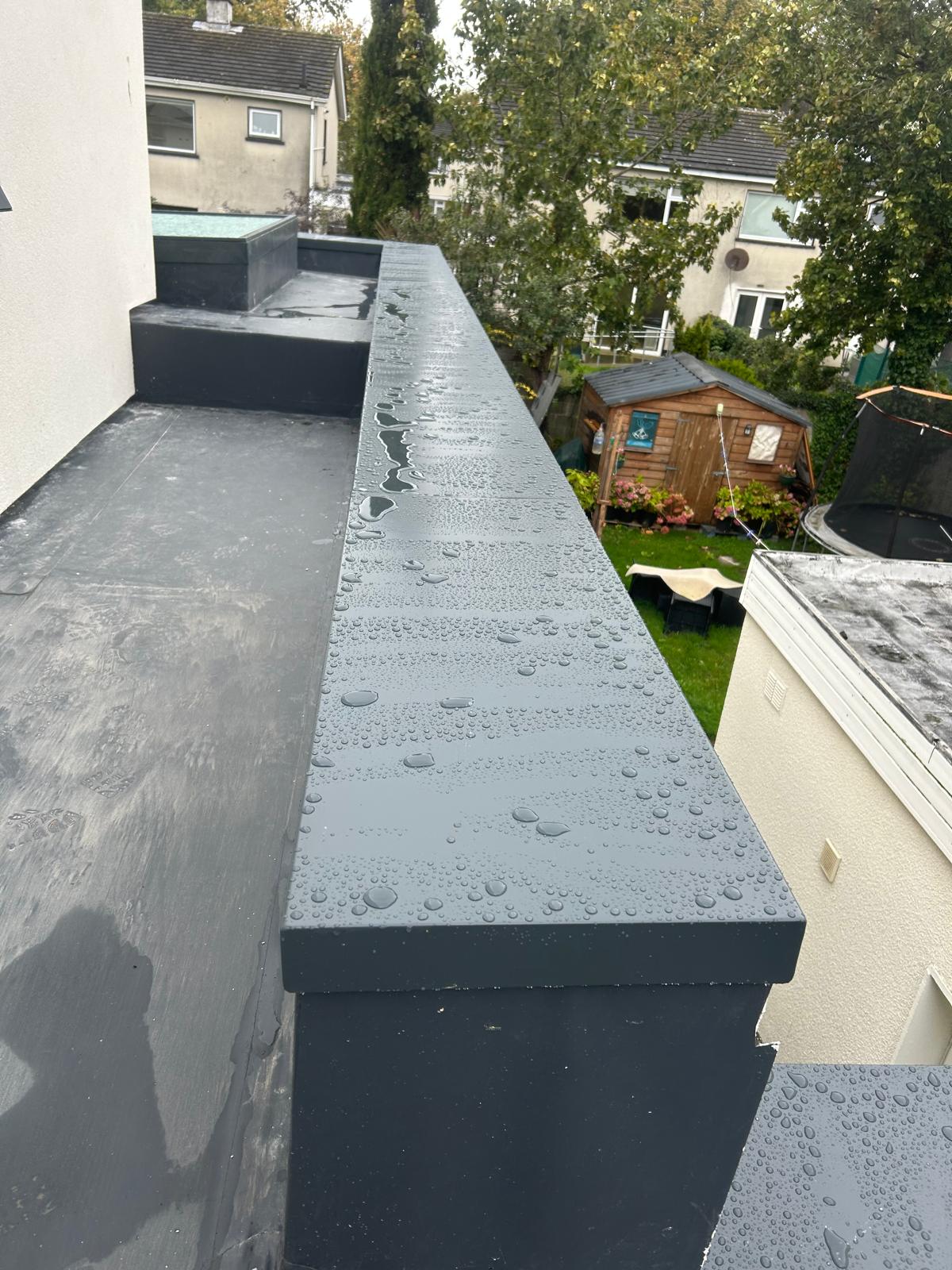
Aluminium Capping Colours for Irish Projects
The most popular colours for aluminium coping in Ireland are:
RAL 7016 Anthracite Grey (matches most modern windows) RAL 9005 Jet Black (contemporary finish) RAL 7012 Basalt Grey (subtle, modern) RAL 7035 Light Grey (lighter buildings) RAL 9016 Traffic White (renders and light finishes)
Custom colours match existing building elements. We colour-matched cappings to a specific shade of heritage green for a project in Killarney where planning required matching the original building.
Ordering Aluminium Capping Through CILLS.ie
The CILLS app handles custom capping orders from measurement to delivery:
Draw your capping layout showing straight runs, corners, and end caps
Enter dimensions for each piece
Select your RAL colour from the colour picker
Review the visual preview showing your exact specification
Checkout with delivery to any Irish address
Lead time is 3-5 business days for standard orders. Urgent jobs can be expedited.
Need aluminium coping for an external insulation project? CILLS.ie fabricates custom parapet capping and wall capping to your exact dimensions, in any RAL colour, delivered anywhere in Ireland.
Secret Fix Cappings
How to Choose the Right Aluminium Coping for Irish Building Projects
Custom aluminium coping and parapet capping for Irish EWI projects. Made to measure, RAL colour matched, fast 3–5 day lead times, and nationwide delivery across Ireland.

Trusted & Used By Professionals From






Order Your First Custom Aluminium Product
Cills.ie makes it easy to measure, customise, and order aluminium cills, flashings, trims, and cappings & more. All online, with engineer support included.